Blog
The history of the Berger guillotine
Why Alphonse-Léon Berger's 1868 guillotine replaced earlier models, the rivalry between the executioner families Berger and Deibler, and how the machine worked.
Earlier guillotines, such as the Schmidt model, were quite basic devices that, among other things, suffered from a problem that was never solved: the impact of the mouton against the base of the risers. The mouton slid along the risers, and hitting the end of the grooves ended up breaking or damaging parts of the machine, however much the executioners tried to cushion it with cloths or leather.
The upper half of the lunette was also operated by hand: the executioner had to hold it while his assistants pushed the prisoner forward until the head was in place. In rainy seasons or very humid conditions the wood swelled, blocking some parts and delaying the execution.
The Schmidt guillotine was not easy to assemble and dismantle. Once the Revolution was over, machines no longer stood permanently on their scaffolds; they were only set up when someone sentenced to death had to be executed. In addition, the French judicial system did not tell prisoners the date of their execution until an hour before. A machine that could be assembled and dismantled very quickly was needed. Guillotines were set up at the very door of the prison until November 1870, when executions on scaffolds in public squares were abolished, partly because they had become spectacles that drew people from all over France.
Metropolitan France was divided into four zones, each with its own executioner and three assistants. When a sentence had to be carried out, the dismantled machine was taken to the city of the execution and assembled in the early hours of that day, while a large contingent of gendarmes kept the curious away. The whole process took less than two minutes; the body went to the morgue and the guillotine was quickly dismantled and sent back.
A guillotine that was easier to dismantle, safer to handle and sturdier, and that did not need the smooth, level surface of a scaffold, was clearly necessary. The model created in 1868 by Alphonse-Léon Berger met all these requirements. Berger had worked as an executioner in Corsica since 1863, combining it with carpentry.
Berger and Deibler, two dynasties of executioners
Berger was born in Perpignan on 15 February 1841, son of Pierre-Martin Berger, the executioner of Perpignan. In 1867 he married Virginie Desmorest, daughter of the executioner of Carpentras, and after her death in 1875 he married Olympe-Marie Roch, daughter of another executioner, Nicolas Roch. In France at that time there were true dynasties of executioners, families who inherited the role generation after generation.
Roch had been the assistant of Jean-François Heidenreich, 'Monsieur de Paris', the chief executioner of metropolitan France, until his death in 1871, and was appointed his successor. Two assistants were assigned to him: Alphonse Berger and Louis Deibler, whose father Joseph also came from a large family of executioners. Both aspired to succeed Roch, who was then 63. Berger assumed the post would be his as Roch's son-in-law, but when Roch died suddenly in December 1878, Louis Deibler was appointed chief executioner, and Berger had to settle for being his first assistant.
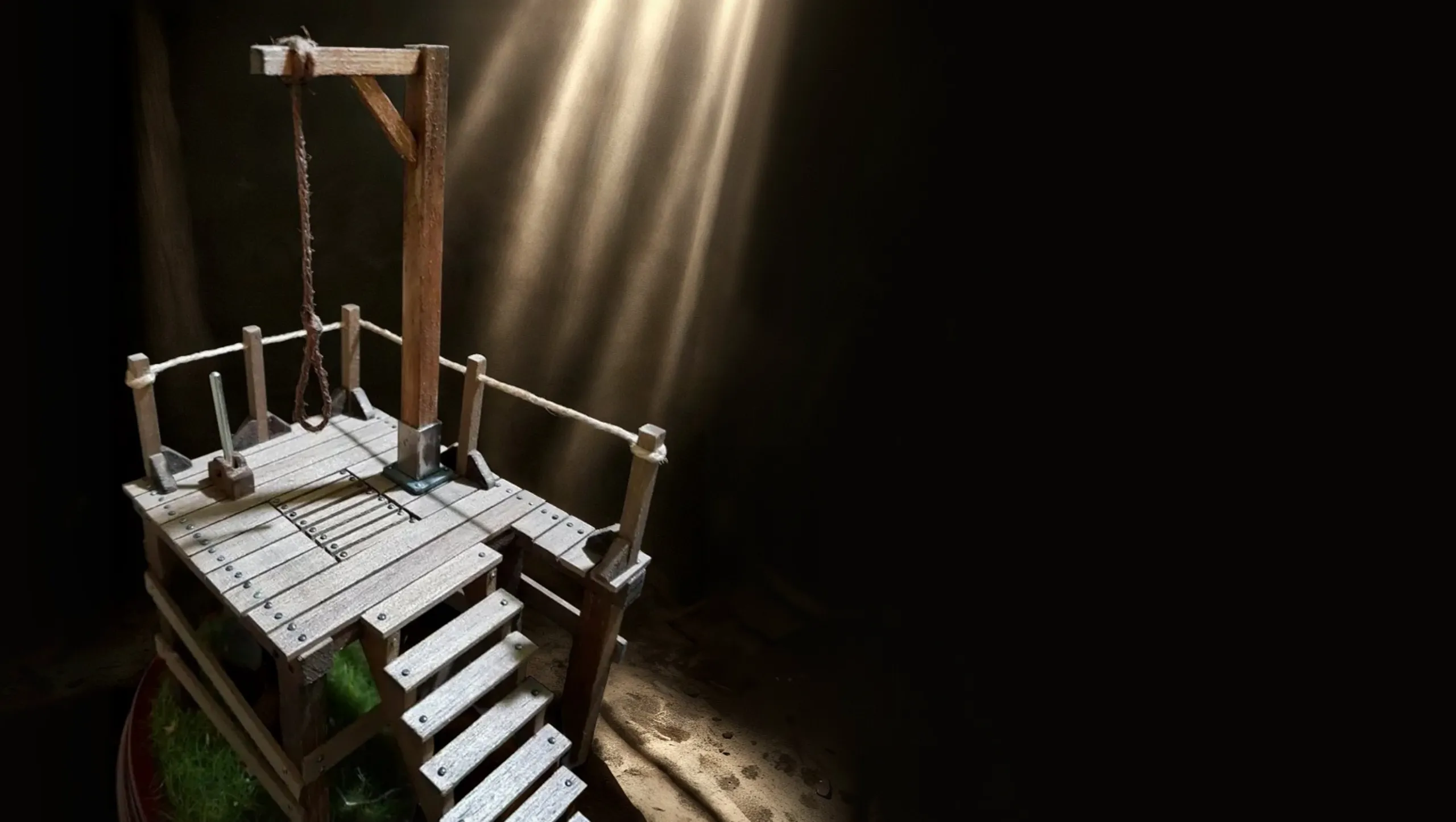
Relations between them went from bad to worse. For the next 20 years Deibler avoided calling Berger to executions, calling instead his son Anatole so he could learn the trade. Berger died on 6 June 1906, aged 65. Deibler remained chief executioner and was succeeded by his son, the famous Anatole. Berger was left with the glory of having created the guillotine that remained in use until the death penalty was abolished in France. I reproduced it at 1/15 scale: read how I made my miniature Berger guillotine.
The execution
After receiving spiritual aid if he wished, the prisoner had the collar of his shirt cut away down to the shoulders. He was offered a glass of rum and a cigarette and escorted by two guards, the prison director, a court representative, the prosecutor and the defence lawyer. A few metres from the prison gate, the executioner, his first assistant and two other assistants were waiting.
By then the guillotine was ready with the lunette open. In a matter of seconds, taking advantage of the shock of seeing the machine, the assistants laid the prisoner horizontally. The executioner pressed the button that released the upper half of the lunette and, almost at the same time, the lever of the mechanism holding the blade, which fell at around 4 metres per second. The body was pushed into a wicker basket lined with zinc and with sawdust at the bottom to soak up the blood. From the moment the prisoner came out until the blade fell, less than 30 seconds passed.
Journalists photographed these executions until the government banned it, and people were even paid to take photos from their houses. Public executions ended in 1939, after the execution of Eugen Weidmann, which drew more than 30,000 people who had crowded the area since the night before. From then on executions took place inside prisons, behind black cloths, and only certain officials knew where the guillotine was.
How did the Berger guillotine work?
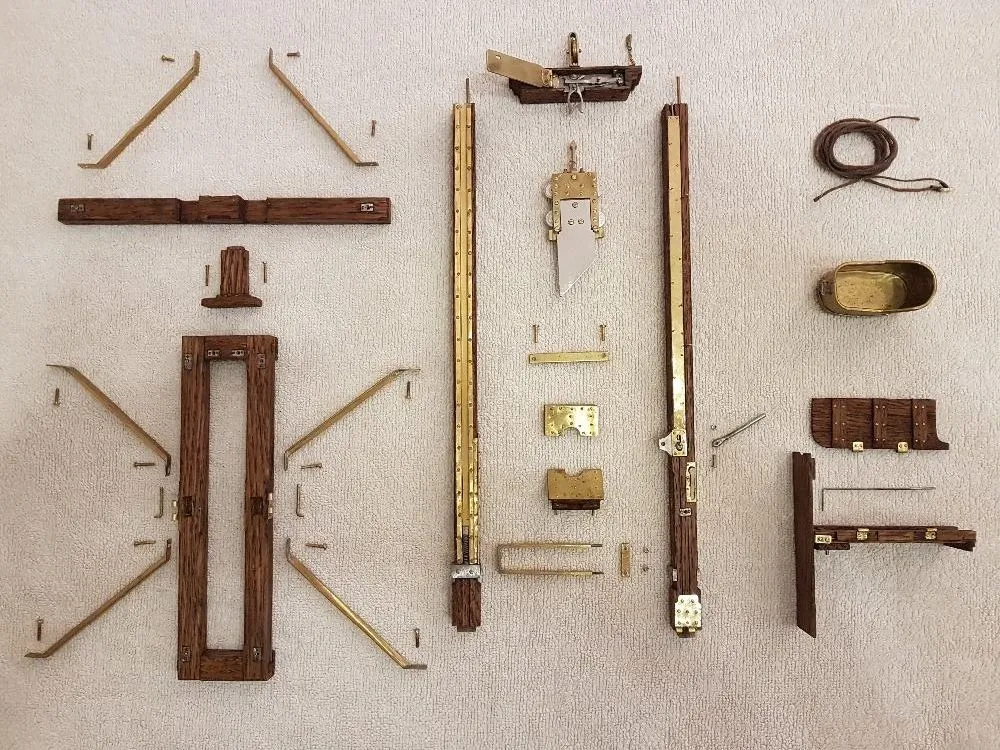
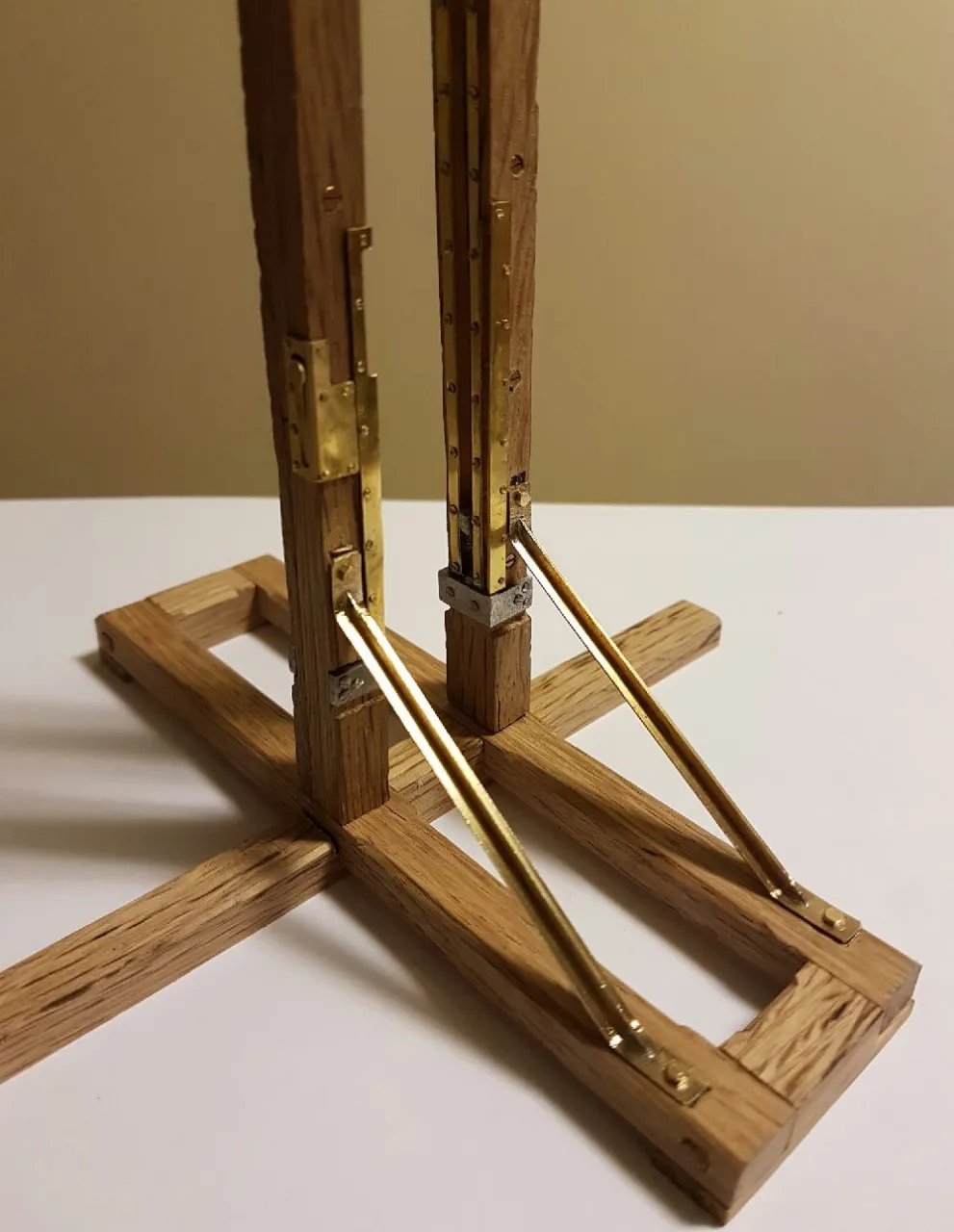
The Berger guillotine was a very well designed machine, built of oak and, in the areas most exposed to damage or wear, bronze and steel. It could be assembled and dismantled in less than three hours: all the parts were joined with assembly screws that went into threaded bushings, so they would not work loose.
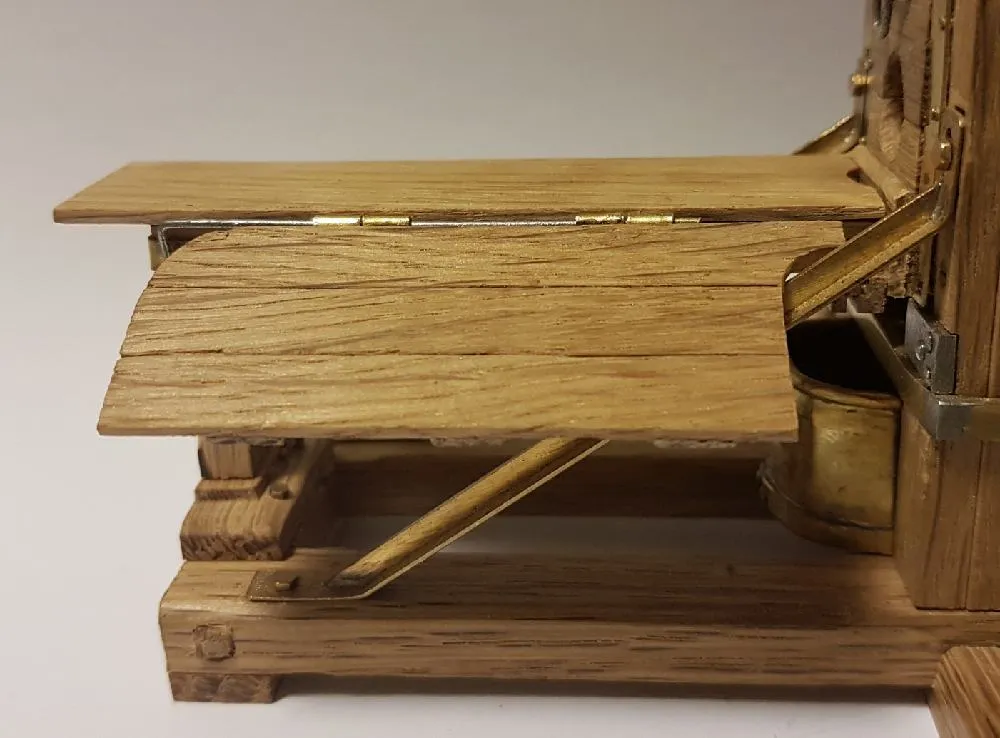
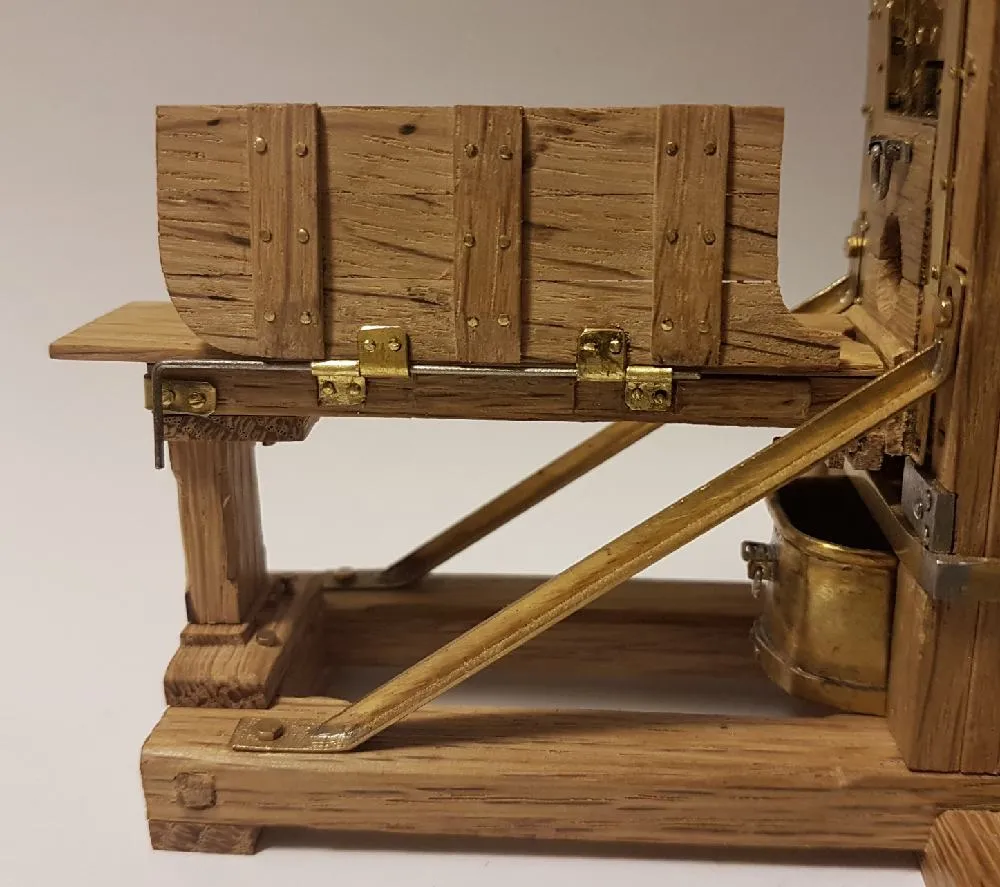
A central crossbar was added to the base to improve stability, because without a scaffold the whole guillotine had to be carefully levelled. Once the base was perfectly horizontal, the risers were fixed with T-shaped iron brackets. The prisoner lay on a seesaw that moved along a slide on a hinge.
A lever released the blade when pulled downwards, and a button kept the upper half of the lunette raised. A zinc bucket replaced the traditional wicker basket for the head, because it could be washed thoroughly; it was common to keep a couple of buckets next to the machine, especially for multiple executions. A folding screen protected the assistant who held the head from the blood.
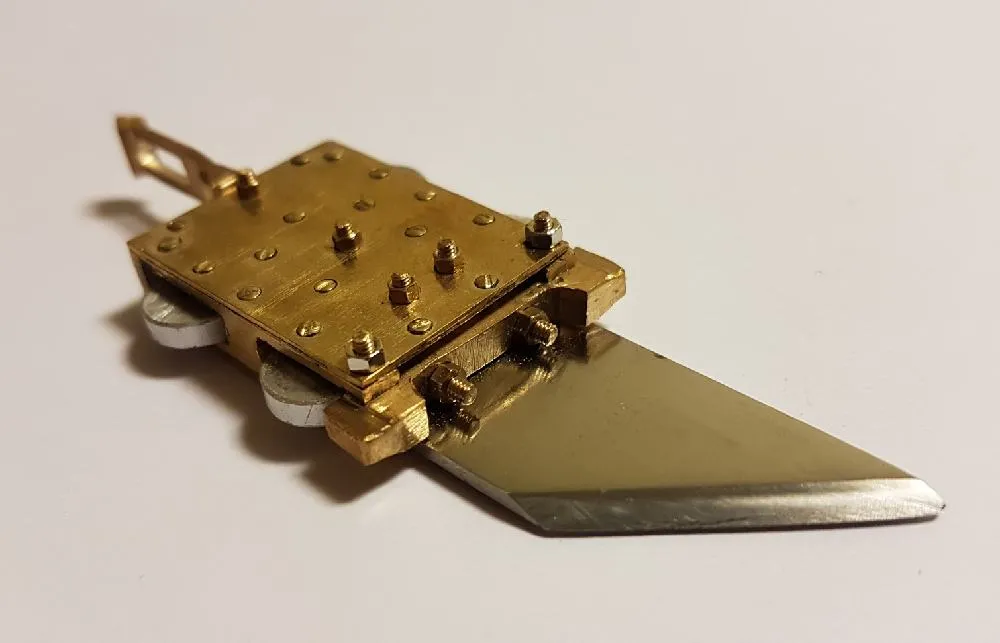
The real complexity was in the mechanism of the capital, which held the blade. It sat inside the capital under a metal cover, next to the pulley whose rope hooked the blade by a pin that locked automatically into a claw. A thin bar ran down a groove in one riser to the release lever; turning it opened the claw and dropped the heavy mouton. A long bronze plate covered the groove.
The mouton, made entirely of metal and weighing 40 to 50 kilos, had bronze rollers instead of the fragile tongues of the Schmidt model. At its base, two stops struck coil springs housed in channels along the risers, lined with bronze to prevent wear. The lunette was lined with metal on one side and slid between two bronze strips. A side panel on the seesaw, held by hinges and a long L-shaped pin, let the body fall into the basket and could be removed easily when dismantling the machine.
For Spanish readers, I strongly recommend the blog Castra in Lusitania and its article on the Berger guillotine (amodelcastillo.blogspot.com).